

How to Stop Graphic Tees From Peeling After Washing
, by Editorial Team , 11 min reading time
Graphic tees peeling after washing usually comes down to heat, friction, and detergent. Learn how to wash, dry, and repair prints so designs last longer.
Last Updated: November 19, 2026
Quick Summary
Graphic tees peeling after washing usually happens because the ink never fully bonded to the fabric, heat softened the ink layer, or friction ground it away. Under-cured ink can look fine on the shelf, then lift loose in the first few washes. Wash inside out in cold water and hang to dry to slow the damage.
Graphic tees peeling after washing comes down to three things: ink that never fully bonded to the fabric, heat that softens the ink layer, and friction that grinds it away.
The two ink families behave differently. Plastisol is a PVC-based paste that sits on top of the cotton and forms a plastic film when heated. It is durable and opaque, but because it sits on the surface it can crack and flake if the film is thick or under-cured. Water-based and discharge inks soak into the fibers and leave no raised layer, so they feel softer and tend to fade rather than peel, but they need enough heat and dwell time to bind, or they lift at the edges.
Curing is the make-or-break step. After printing, the ink must reach a specific temperature for a specific time so the resin cross-links and fuses to the fabric. For plastisol, curing temperatures are set by the printer and the ink manufacturer's specifications. Under-cured ink looks fine on the shelf, then the first few washes pull it loose. Peeling after washing can often point to a manufacturing problem rather than detergent.
Fabric composition changes the odds. Ink adhesion depends on both the fabric and the ink chemistry used in printing.
Detergent chemistry is the quiet accelerant. Modern detergents lean on enzymes and sometimes oxygen bleach to break down organic soils, and those same enzymes can attack the resin binders in a print over many cycles. Powder detergents with built-in bleach and any product containing chlorine bleach are harsher still. This is why a shirt can survive dozens of gentle washes and then start peeling once you switch detergents or add bleach.
Friction is the final straw. Once the bond is marginal, abrasion from zippers, thick seams, and heavy items in the drum does the rest. A print that is 90% bonded can survive years of gentle washing; the same print washed with jeans and dried on high may fail in a season.
Washing graphic tees inside out in cold water on a gentle cycle, then hanging them to dry, is a commonly recommended care approach.
Follow these steps:
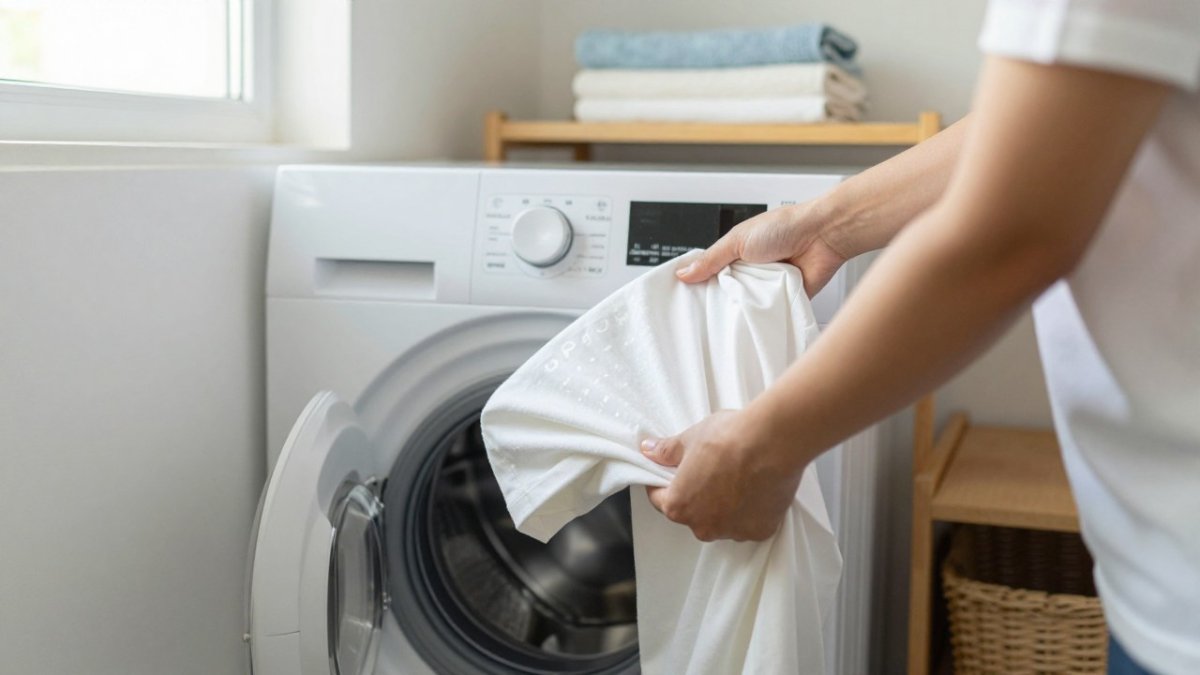
A common mistake is washing prints with heavy items like jeans. Fabric friction from zippers and thick seams wears ink down fast. Wash graphic tees with soft items only.
Print curing at the factory sets the baseline durability of a print. At home, gentler care can help a well-made print last longer.
If shrinking worries you as much as peeling, our guide on how to stop graphic tees from shrinking covers the washing habits that protect fit and print together.
Most guides stop at prevention. This section covers what to do once the damage is done, and the first step is figuring out which kind of failure you have, because the fix differs for each.
Diagnose before you repair. Look at how the print is failing:
Reseal a small lifted edge. Lay the shirt flat on a firm, heat-safe surface. Cover the loose edge with a thin cotton cloth or parchment. Press with a warm, not hot, iron for a few seconds at a time, checking between presses. The goal is to soften the ink just enough to re-adhere, not to melt it. Let the shirt cool completely flat before moving it. This holds for a few washes and then lifts again; it is a stopgap, not a cure.
Cover larger damage. A heat transfer vinyl (HTV) patch applied over the failing area is the most durable home fix, cut a shape that covers the peel plus a margin, and follow the vinyl manufacturer's press instructions. A fabric marker can disguise small flakes on dark shirts but will not stop the peel from spreading.
Stabilize what you can't fix. If the print is flaking, washing the shirt inside out in cold water and hanging it to dry can help limit further damage.
Watch out: ironing directly on plastisol ink can melt it onto your iron and ruin both the shirt and the soleplate, and pressing too hot can shrink the surrounding cotton or leave a permanent shiny scorch mark.
The right fix depends on how the print is failing, so diagnose the damage before you repair it.
Failure type |
What it looks like |
Fix |
|---|---|---|
Lifting at the edges |
Ink film peels up in one piece from the perimeter |
Reseal with a warm iron; most repairable case |
Cracking then flaking |
Web of fine lines, film has lost flexibility |
Cosmetic repair at best |
Fading with no film |
Ink gone from fibers, typical of water-based prints |
Nothing to reseal |
Powdery or chalky residue |
Ink never properly fused |
Resealing rarely holds |
Peeling prints are frustrating, but the fix is mostly habit: cold water, inside out, low heat. Outdoors Club USA builds our tees on premium Comfort Colors blanks with garment-dyed finishes, and every order ships free. When you want graphic tees that celebrate the Great American Outdoors and support wilderness therapy for veterans and first responders, our collection is built for exactly that. Get started with Outdoors Club USA and wear your adventures with confidence.
A single wash can cause peeling when the ink was under-cured at the factory or when the shirt hit high heat and heavy agitation. Under-cured plastisol or water-based ink never fully bonded to the fabric, so the first wash cycle lifts the ink layer. Washing inside out in cold water and tumble drying on low are commonly recommended care steps. If a print peels after one wash, the curing process, not your laundry routine, is usually the cause.
Yes. High heat softens the ink layer and speeds up thermal degradation, so the print loses adhesion and starts to crack or lift at the edges. Tumble dry on low or hang the shirt to dry. If you must use a dryer, keep the shirt inside out and pull it out while slightly damp. Avoiding high heat is one of the simplest ways to prevent t-shirt designs from cracking over time.
You can slow further peeling and sometimes reattach a lifted edge. Place parchment paper over the print and press with a heat press or iron on low, no steam, for a few seconds. For larger flakes, trim the loose edges with small scissors so they do not catch in the wash. A peeling shirt decal will not return to new condition, but these steps extend its life.
